Unfortunately our keynote changed! Please click this link to our new agenda:
https://hikm.acm.org/childhood-disabilities-to-aged-care-dementia/

23 June 2026, 3pm-5pm (Brisbane AEST)
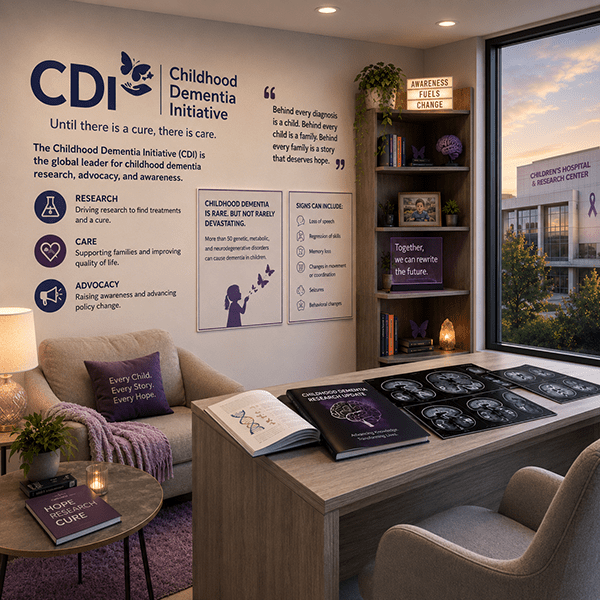
Childhood dementia is a rare, life-limiting group of mostly genetic neurodegenerative conditions affecting an estimated 700,000 children and young people worldwide.
Symptoms begin, on average, at around 2.5 years of age, but diagnosis often occurs later, around age four, after families have already entered a frightening race against time. More than 100 genetic disorders can cause childhood dementia; there are currently no cures, and half of affected children die by age 10. Rates of death in Australia are similar to childhood cancer, yet childhood dementia remains far less recognised and under-resourced.
The only consistent pattern is regression: children begin losing skills they had already learned — speech, movement, memory, learning, behaviour, vision, play, social connection, or independence. These changes may first be noticed by parents, early-childhood educators, teachers, GPs, psychologists, nurses, physiotherapists, speech therapists, occupational therapists, paediatricians, geneticists, or neurologists. Yet each professional may see only one fragment of the picture, leading to misdiagnosis, delayed referral, and years of uncertainty.
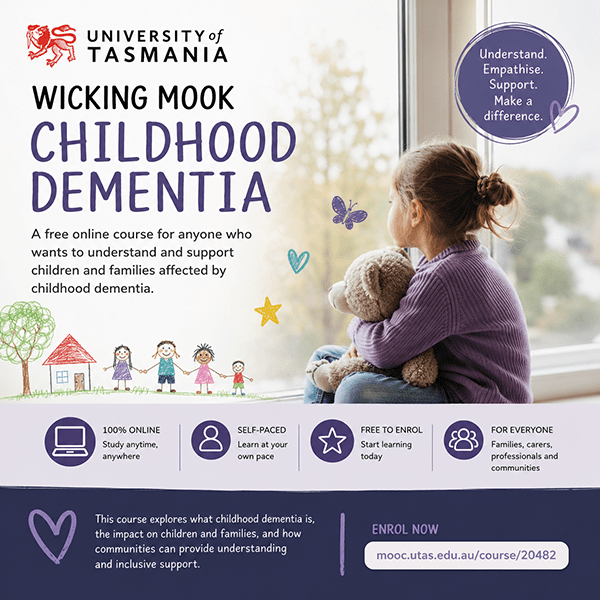
The University of Tasmania’s Wicking Dementia Research and Education Centre has responded with its Understanding Childhood Dementia course, designed for families, educators, health professionals, policy makers, support workers, and anyone seeking to understand childhood dementia, its symptoms, underlying conditions, diagnosis, genetics, lived experience, and care needs.
Dr Emily Handley, Wicking Research and Education Centre, University of Tasmania
Dr Handley will outline the current research in this important area of Dementia Research.